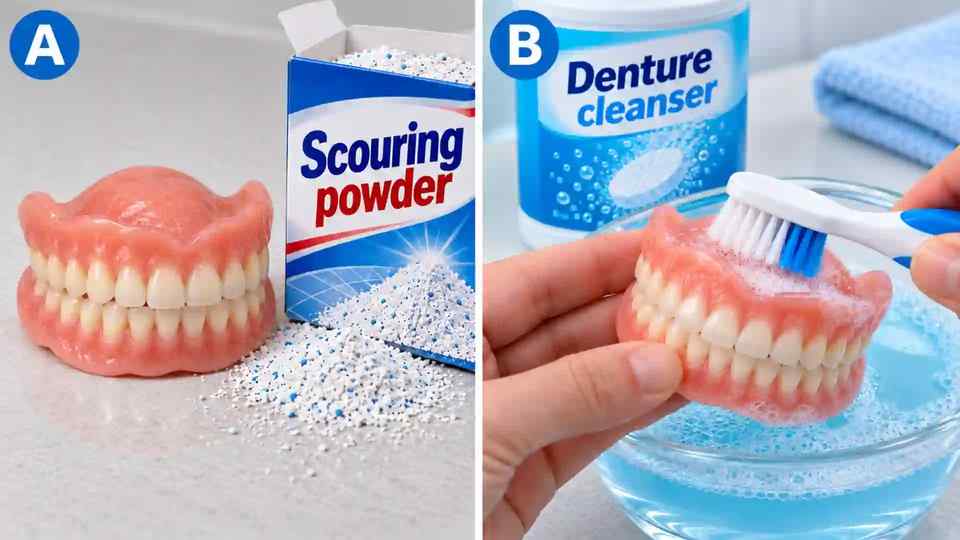
How to Clean Removable Dentures: Choosing the Right Denture Cleanser
The correct quiz answer is B: Denture cleanser. To clean removable dentures, take them out, rinse away food debris, gently brush every surface with a nonabrasive denture cleanser, and rinse thoroughly before wearing them again. Denture cleaning tablets or solutions can supplement brushing, but they should never be used inside the mouth. Choose a cleanser compatible with your denture materials and follow the manufacturer's soaking instructions.
Key Takeaways:
Brush removable dentures daily using a denture brush or soft-bristled toothbrush with an appropriate nonabrasive cleanser.
Cleaning tablets and solutions can supplement brushing by helping remove deposits and reduce microbial buildup.
Avoid household scouring powders, abrasive toothpaste, bleach, and very hot water because they may damage denture materials.
Different denture materials and attachments may require different cleaning products and methods.
Clean the gums, tongue, remaining natural teeth, and other oral tissues as part of daily denture hygiene.
Rinse dentures thoroughly after cleaning and follow appropriate overnight storage instructions.
This guide explains a seven-step denture cleaning routine, how to compare denture cleansers, which products to avoid, and when professional dental care is necessary.
Medical information notice: This article provides general educational information and does not replace personalized advice from a licensed dental professional.
Quiz Answer: Which Product Is Designed to Clean Removable Dentures?
Denture cleanser is the correct answer. A denture cleanser is specifically intended to help clean removable dental appliances and remove deposits that collect during daily use.
Products may be supplied as nonabrasive cleaning pastes, gels, tablets, or solutions. The appropriate choice depends on the denture material and the manufacturer's directions.
Household scouring powder is not recommended because it contains abrasive particles that can scratch denture surfaces, damage their finish, and make cleaning more difficult over time.
Denture cleaning should combine gentle brushing with appropriate soaking when indicated. Always remove the appliance before cleaning and rinse it thoroughly before putting it back into your mouth.
Why Is Daily Denture Cleaning Important?
Removable dentures collect food particles, plaque, and microorganisms throughout the day. Although artificial teeth cannot develop cavities, deposits on denture surfaces can contribute to odors, irritation, and oral infections.
Denture biofilm is a layer of microorganisms embedded in material that adheres to the denture surface. Like plaque on natural teeth, it requires regular removal.
Poor denture hygiene is associated with denture stomatitis, an inflammatory condition affecting tissues covered by the appliance. Fungi, including Candida species, may contribute, particularly when dentures are worn continuously or cleaning is inadequate.
The American Dental Association and American College of Prosthodontists recommend daily cleaning using brushing and an effective, nonabrasive denture cleanser.
Proper cleaning helps maintain the appliance and oral hygiene, but it cannot correct poor denture fit, repair fractures, or treat every cause of mouth irritation.
How to Clean Removable Dentures Step by Step
The recommended routine combines careful handling, gentle brushing, appropriate soaking, and thorough rinsing. Always clean removable dentures outside the mouth.
Step 1: Remove the dentures carefully. Take out the appliance according to your dentist's instructions. Fill the sink with water or place a folded towel underneath your hands to reduce the risk of damage if the dentures slip.
Step 2: Rinse away loose food and adhesive. Use cool or lukewarm running water to remove food particles and debris. Gently remove remaining denture adhesive without bending clasps or delicate attachments.
Step 3: Choose a suitable brush. Use a denture brush or soft-bristled toothbrush that can reach the artificial teeth, inner fitting surface, and other contours. Avoid hard bristles and excessive pressure.
Step 4: Brush every surface. Apply a cleanser designed for removable dentures, following its instructions. Gently brush the artificial teeth, outer surfaces, inner surface that contacts the gums, and accessible areas around clasps or attachments.
Step 5: Soak when appropriate. Prepare a denture cleaning tablet or solution exactly as directed. Use the recommended amount of product, water temperature, and soaking duration. Do not assume longer soaking is better.
Step 6: Rinse thoroughly. After brushing or soaking, rinse the dentures thoroughly under running water before wearing them again. Never use a denture cleanser as mouthwash.
Step 7: Clean your mouth and store the dentures properly. Gently clean the gums, tongue, and palate. Brush remaining natural teeth with fluoride toothpaste and clean between them daily. Store the dentures according to your dentist's instructions, keeping conventional appliances moist when indicated.
These seven steps support consistent cleaning while helping protect the denture materials.
Which Type of Denture Cleanser Should You Choose?
The best denture cleanser is one that cleans the appliance effectively without damaging its materials. Common options include effervescent tablets, liquid cleaning solutions, and nonabrasive cleaning pastes or gels.
Effervescent cleaning tablets dissolve in water to create a cleaning solution. They are convenient for routine soaking, but soaking duration and material compatibility must be checked.
Liquid denture cleansers may be supplied ready to use or as concentrates. Follow the label for dilution, exposure time, and suitable materials.
Denture cleaning pastes or gels are applied during brushing and can support targeted removal of surface deposits. They should be nonabrasive and intended for the particular appliance.
Mild soap may be an accessible alternative in selected situations when the dentist or appliance instructions permit it. The product must be suitable for the material and rinsed away completely.
Professional cleaning can address deposits that cannot be removed adequately at home.
An ultrasonic cleaning device may also be used as an aid, but it does not automatically replace brushing or appropriate chemical cleaning. Confirm compatibility before using one.
The ADA notes that commercial denture cleansers are available in multiple forms. The manufacturer's directions determine their appropriate use.
Are Denture Cleaning Tablets Better Than Brushing?
Denture cleaning tablets and brushing are complementary methods rather than substitutes for one another.
Brushing physically removes food debris, adhesive residue, plaque, and other deposits from accessible denture surfaces.
A chemical soaking solution may help reduce microbial buildup and address certain stains or odors, depending on its formulation and instructions.
The American College of Prosthodontists' evidence-based guidelines recommend daily soaking and brushing with an effective, nonabrasive cleanser.
Cleaning tablets may be convenient for people who prefer a predictable routine, but products differ in ingredients, material compatibility, and required soaking times.
Some formulations contain ingredients that may irritate sensitive individuals. Product selection should reflect the appliance's materials, relevant allergy warnings, and professional guidance rather than advertising claims alone.
How Can You Find the Best Denture Cleanser for Your Dentures?
The most appropriate denture cleanser depends on the type of appliance and its materials.
Conventional full acrylic dentures: Gentle brushing combined with an approved denture soaking product may be appropriate. Check compatibility with acrylic resin and artificial teeth.
Partial dentures with metal clasps: Choose a nonabrasive product that is safe for the metal framework, clasps, and other components. Some cleaning chemicals can damage incompatible metals.
Flexible partial dentures: Follow material-specific cleaning instructions because flexible resin and nylon-based materials may respond differently to heat, chemicals, or brushing.
Implant-retained removable dentures: Clean the denture and accessible attachment areas as instructed. Attachment components may require special handling or professional maintenance.
Dentures with persistent staining: A compatible stain-removing cleanser may help, but stubborn buildup may require professional cleaning.
Chemical sensitivity: Review ingredients and allergy warnings. Ask a dentist about suitable alternatives if previous products caused irritation.
Material compatibility is more important than choosing a cleanser solely because of its brand, price, fragrance, or advertised strength.
How Long Should Dentures Soak in Cleaning Solution?
The appropriate soaking time is the duration specified by the cleanser manufacturer for the particular denture material.
Some products are designed for short soaking periods, while others permit longer use. There is no universal soaking time suitable for every denture cleanser.
Use the recommended amount of product and water. Follow the stated temperature limits and observe any minimum or maximum soaking duration.
Do not mix cleaning products, and never assume that using more cleanser or soaking for longer will improve cleaning results.
Rinse the dentures thoroughly after soaking to remove residual cleaning chemicals.
Avoid boiling or very hot water because heat may distort acrylic or other denture materials and affect the appliance's fit.
When cleaning solution is not indicated, plain water may be appropriate for storing many conventional dentures and helping prevent drying.
Should You Remove Dentures Before Sleeping?
For most removable denture wearers, removing the appliance overnight is recommended to give the oral tissues a period without continuous coverage.
The National Health Service recommends removing dentures at night unless a dentist advises otherwise.
Some patients may receive different instructions immediately after extractions or denture placement. Follow the treating clinician's specific postoperative advice in those situations.
When dentures are not being worn, store them in a clean, secure container using the method recommended for the appliance.
For many conventional dentures, clean water helps prevent drying and distortion. Denture cleaning solutions may be suitable for overnight soaking only when the product label and appliance instructions specifically permit it.
Change storage water regularly, clean the container, and keep denture cleaning products away from children and pets.
What Cleaning Products Should You Avoid?
Products suitable for household surfaces or natural teeth are not automatically safe for removable dentures.
Household scouring powder: Abrasive particles can scratch denture surfaces and damage their finish. Use a compatible, nonabrasive denture cleanser instead.
Regular abrasive toothpaste: Some toothpaste formulations may scratch acrylic or other denture materials.
Household bleach: It may discolor or damage certain denture materials, particularly appliances containing metal components.
Hot or boiling water: High temperatures can distort denture bases and alter their fit.
Hard-bristled brushes: Stiff bristles and excessive pressure may scratch surfaces or damage delicate attachments.
Undiluted household chemicals: Products not designed for dentures may damage materials or create unnecessary chemical exposure risks.
Do not experiment with mixtures of bleach, vinegar, peroxide, or other household chemicals. Follow the instructions provided by the dentist and appliance manufacturer.
Are Denture Cleansers Safe to Use Every Day?
Denture cleansers are generally intended for regular use when the product is compatible with the appliance and the manufacturer's instructions are followed.
Cleaning tablets and solutions are designed for use outside the mouth. Never chew or swallow cleaning tablets, gargle with denture cleaning solution, or use a denture cleanser as mouthwash.
Always rinse dentures thoroughly after brushing or soaking to remove residual cleaning chemicals before wearing them again.
Some denture cleansing products contain persulfate compounds, which can cause allergic contact reactions in susceptible individuals.
A 2022 study published in Contact Dermatitis identified persulfates in several denture cleansing products sold in the United States. The study examined consumer product ingredients rather than measuring how frequently users experience allergic reactions.
Although allergic reactions are possible, this does not mean every persulfate-containing product will cause a reaction in every user.
Check ingredient lists and allergy warnings before choosing a cleanser. If irritation develops or an allergic reaction is suspected, stop using the product and consult a healthcare professional.
Seek emergency medical care for difficulty breathing or signs of a severe allergic reaction.
Reference: Dean OR, Somers KE. Persulfate-containing consumer products in the US market. Contact Dermatitis, 2022. https://pubmed.ncbi.nlm.nih.gov/34921563/
What Is the Difference Between Denture Adhesive and Denture Cleanser?
Denture adhesive and denture cleanser are different products with different purposes.
A denture adhesive helps improve the retention and stability of a removable denture while it is being worn. It may be supplied as a cream, powder, strip, or wafer.
A denture cleanser removes deposits and supports hygiene. It may be supplied as a tablet, solution, gel, or paste and is used outside the mouth.
Some denture wearers may use both products. When adhesive is used, remaining adhesive residue should be removed as part of daily cleaning.
Denture adhesive cannot correct an appliance that no longer fits properly. Denture cleanser also cannot improve the structural fit of a denture.
If increasing amounts of adhesive are needed to keep a denture stable, arrange a professional assessment rather than repeatedly applying more product.
How Should You Clean Your Mouth When Wearing Dentures?
Good denture hygiene includes caring for the gums, tongue, palate, cheeks, and any remaining natural teeth.
Remove removable dentures before cleaning the mouth. Gently clean the gums, tongue, and palate using a suitable soft brush or another method recommended by the dentist.
If natural teeth remain, brush them twice daily with fluoride toothpaste and clean between them every day.
People with implant-retained removable dentures should also follow their dentist's instructions for cleaning around the accessible implant attachments.
Persistent gum inflammation or bleeding requires professional assessment. Cleaning the denture alone cannot treat periodontal disease affecting natural teeth.
Routine dental visits remain important even for people who no longer have any natural teeth because the dentist can assess oral tissues, appliance fit, and other possible health concerns.
What If Your Dentures Still Smell or Look Stained?
Persistent odors, stains, and deposits do not always mean a stronger denture cleanser is necessary.
Persistent odor: Remaining biofilm, food particles, or adhesive residue may be present. Review brushing technique and cleanser instructions.
Yellow or brown stains: Food, beverages, tobacco, or accumulated deposits may contribute. A compatible stain-removing cleanser or professional cleaning may help.
White or hard deposits: Mineralized buildup may require professional removal rather than scraping at home.
Cloudy or scratched surfaces: Abrasive cleaning or material wear may be responsible. Avoid further abrasive products and request a dental assessment.
Loose dentures: Changes in oral tissues or appliance fit may require adjustment, relining, or replacement.
Sore or red gums: Irritation, pressure from an ill-fitting appliance, or possible infection should be assessed professionally.
A dentist or dental professional may use appropriate equipment, polishing techniques, or ultrasonic cleaning to remove stubborn deposits. Do not scrape the appliance with sharp metal tools.
When Should You See a Dentist About Your Dentures?
Cleaning problems sometimes indicate that the denture or supporting oral tissues need professional attention.
Arrange a dental appointment if the appliance repeatedly causes soreness, rubbing, or pressure spots; slips or clicks; or no longer fits securely.
Persistent redness, swelling, bleeding, white patches, or other unusual changes beneath a denture should also be evaluated.
Contact the dentist if the appliance cracks, breaks, loses an artificial tooth, or continues to develop odors or deposits despite appropriate cleaning.
Denture stomatitis and other oral conditions cannot always be resolved by changing cleaning products. The dentist may need to assess fit, hygiene, medication use, or possible infection.
Do not reshape or repair dentures using household tools or glue.
Even people with complete dentures should continue regular dental examinations so oral tissues and appliance condition can be monitored.
How Can You Choose Denture Care Products Without Overspending?
A basic denture cleaning routine does not require a large collection of expensive products.
A suitable denture brush, a compatible nonabrasive cleanser, a clean storage container, and consistent daily cleaning are generally more important than premium packaging.
Before choosing a product, check that it is specifically intended for removable dentures and compatible with your appliance materials.
Review soaking instructions, water temperature limits, ingredients, allergy warnings, and directions for rinsing after cleaning.
When choosing a product for brushing, confirm that the formulation is nonabrasive. When selecting a soaking product, verify that its ingredients and exposure time are suitable for acrylic, metal, flexible materials, or attachments as applicable.
Products carrying the ADA Seal of Acceptance have been evaluated against ADA safety and effectiveness criteria. The absence of the Seal does not automatically mean that a product is unsafe.
Choose a cleanser whose intended benefits match your needs and whose ongoing cost is manageable for regular use.
Common Denture Cleaning Mistakes to Avoid
Using regular abrasive toothpaste: Products intended for natural teeth may scratch certain denture materials. Choose an appropriate nonabrasive cleanser.
Relying only on soaking: Cleaning tablets and solutions may supplement daily care, but brushing remains important for physically removing deposits.
Using very hot water: High temperatures can distort the appliance and affect fit.
Wearing removable dentures continuously: Most patients should remove their dentures overnight unless their treating dentist provides different instructions.
Using more cleanser than directed: Extra chemicals or longer soaking times do not guarantee better results and may damage materials.
Ignoring a loose or uncomfortable appliance: Cleaning products cannot correct changes in fit, repair broken components, or treat every cause of oral irritation.
Frequently Asked Questions About Denture Cleaning
Which product is designed to clean removable dentures?
Denture cleanser is the correct choice. Use a compatible, nonabrasive product rather than household scouring powder, which may damage denture surfaces.
What is the best denture cleanser for everyday use?
The best choice is a nonabrasive product approved for the specific appliance materials. Tablets, solutions, pastes, and gels may all be suitable depending on the denture and product instructions.
Can I clean dentures with regular toothpaste?
Regular toothpaste may contain abrasives that scratch denture materials. A nonabrasive cleanser intended for removable dentures is generally preferred.
Do denture cleaning tablets replace brushing?
No. Tablets can help reduce deposits and microorganisms, but daily brushing remains important for removing food, plaque, and adhesive residue.
Can I leave dentures in cleaning solution overnight?
Only when the cleanser instructions and appliance care guidance permit overnight soaking. Some products are intended for shorter use, and plain water may be more appropriate for overnight storage.
Can I use household bleach to clean removable dentures?
Household bleach is not recommended as a routine denture cleanser. It may discolor or damage certain materials, particularly components containing metal.
Why do my dentures still smell after cleaning?
Persistent odor may result from remaining biofilm, adhesive residue, hardened deposits, or an oral health condition. Review your cleaning routine and seek dental assessment if the problem continues.
Are denture cleansers safe for daily use?
They are generally intended for regular use when compatible with the appliance and used according to instructions. Cleaning solutions must remain outside the mouth, and dentures must be rinsed thoroughly before being worn again.
Sources
- American Dental Association (ADA). Denture Care and Maintenance. https://www.ada.org/resources/ada-library/oral-health-topics/dentures
- American Dental Association, MouthHealthy. Dentures. https://www.mouthhealthy.org/all-topics-a-z/dentures
- American Dental Association, MouthHealthy. Partial Dentures. https://www.mouthhealthy.org/all-topics-a-z/dentures-partial
- Felton D, et al. Evidence-Based Guidelines for the Care and Maintenance of Complete Dentures. Journal of Prosthodontics, 2011. https://pubmed.ncbi.nlm.nih.gov/21324026/
- American College of Prosthodontists. Frequently Asked Questions About Dentures. https://www.gotoapro.org/dentures-faq/
- National Health Service (NHS). Dentures. https://www.nhs.uk/tests-and-treatments/dentures/
- Dean OR, Somers KE. Persulfate-containing Consumer Products in the US Market. Contact Dermatitis, 2022. https://pubmed.ncbi.nlm.nih.gov/34921563/
- American Dental Association, MouthHealthy. Healthy Teeth and Gums for Adults Over 60. https://www.mouthhealthy.org/life-stages/adults/healthy-habits-adults-over-60