Do Baby Teeth Have Roots? Understanding Primary Tooth Development and Shedding
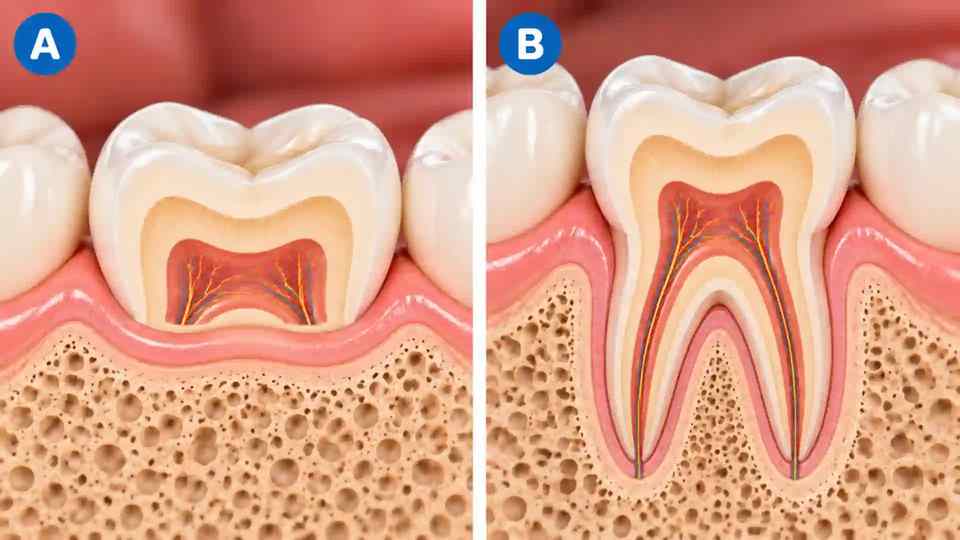
The correct quiz answer is B: They have roots. Baby teeth, also called primary teeth, have roots that anchor them in the jaw and support normal biting and chewing. As permanent teeth develop and approach eruption, the roots of most baby teeth gradually dissolve through a natural process called physiological root resorption.
Key Takeaways:
Baby teeth have real roots that anchor them in the jaw.
Baby tooth roots gradually resorb as permanent teeth develop and approach eruption.
The roots of baby teeth help support chewing and normal oral function.
Most children begin losing baby teeth around age six, although timing varies.
Baby teeth help children chew, develop speech, and maintain space for permanent teeth.
A baby tooth that is painful, swollen, broken, or unusually loose may need professional assessment.
Baby teeth need proper dental care even though they are temporary.
This guide explains primary tooth roots, how root resorption works, when children typically lose baby teeth, and when parents should seek dental care.
Medical information notice: This article provides general educational information and does not replace individualized examination, diagnosis, or treatment from a licensed dental professional.
Quiz Answer: Which Statement About Baby Teeth Is True?
The correct answer is B: They have roots. Baby teeth have roots that anchor them in the jawbone and support normal biting and chewing.
The statement that baby teeth have no roots is incorrect. Both baby teeth and permanent teeth have roots. The difference is that the roots of most baby teeth gradually undergo physiological root resorption as permanent teeth develop and approach eruption.
As root structure is resorbed, a baby tooth becomes less firmly anchored and can eventually fall out. This is a normal part of childhood dental development, not a sign that baby teeth never had roots.
What Are the Roots of Baby Teeth For?
Baby teeth, also called primary teeth or deciduous teeth, have roots that anchor them in the jawbone. These roots help stabilize the teeth during biting and chewing.
Inside each tooth is the pulp, which contains nerves, blood vessels, and connective tissue. The roots contain root canals through which these tissues extend, while the periodontal ligament helps connect the tooth to its supporting bone.
The number and shape of roots depend on the type of tooth. Baby incisors and canines generally have one root, while baby molars usually have multiple roots. Primary molar roots are relatively slender and widely spread, helping accommodate the developing permanent teeth nearby.
The main difference between baby teeth and permanent teeth is not that one has roots and the other does not. Both have roots. Instead, most primary teeth undergo a natural developmental process that allows them to be replaced by permanent teeth.
Baby teeth also help children chew food, develop speech, and maintain space for their permanent successors. Losing a baby tooth too early can sometimes affect the position of neighboring teeth and the space available for a permanent tooth.
Why Do Baby Tooth Roots Dissolve?
Baby tooth roots dissolve through a biological process called physiological root resorption. This is the natural breakdown and reabsorption of root tissue that allows a primary tooth to loosen and eventually fall out.
As the permanent successor develops beneath or near a baby tooth, signals from the developing tooth and surrounding tissues help regulate root resorption. Specialized cells called odontoclasts and other resorptive cells participate in breaking down mineralized root tissues. The body then processes and reabsorbs the resulting material.
The process generally occurs gradually rather than all at once. As more root structure is lost, the baby tooth becomes less firmly anchored and may begin to wiggle.
Root resorption is a normal part of primary tooth development, not a disease. However, the timing and extent of resorption vary among children and between individual teeth.
Research on physiological root resorption in primary teeth describes the cellular and tissue processes involved in this natural transition: https://pubmed.ncbi.nlm.nih.gov/17429176/.
How Do Baby Teeth Differ From Permanent Teeth?
Baby teeth are smaller than permanent teeth and have anatomical features suited to a child's developing mouth. Their enamel and dentin are thinner, and their pulp chambers are proportionally larger. These differences matter because decay can reach the inner tissues of a baby tooth relatively quickly.
Children typically develop 20 primary teeth, while a full permanent dentition usually contains up to 32 teeth, including wisdom teeth. Both types have roots, but most primary tooth roots normally resorb before shedding, while permanent tooth roots usually remain to support the teeth.
Baby teeth support early chewing and speech and help maintain space for developing permanent teeth. Permanent teeth are intended to serve throughout adulthood with appropriate care.
These differences explain why a dentist may recommend treatment for a baby tooth rather than simply waiting for it to fall out.
When Do Children Start Losing Baby Teeth?
Most children begin losing baby teeth around age six, although some lose their first tooth earlier or later. The lower front incisors are commonly among the first teeth to become loose, followed by the upper front teeth and, later, the canines and molars.
The shedding sequence generally follows the order in which different permanent teeth approach eruption, but individual variation is normal.
Typical shedding ranges include:
Lower central incisors: 6–7 years.
Upper central incisors: 6–7 years.
Lateral incisors: 7–8 years.
First primary molars: approximately 9–11 years.
Canines: approximately 9–12 years.
Second primary molars: approximately 10–12 years.
These are general ranges, not strict deadlines. A pediatric dentist can assess a child's overall eruption pattern when parents have concerns.
Source: American Dental Association, Primary Tooth Development: https://www.ada.org/-/media/project/ada-organization/ada/ada-org/files/resources/public-programs/give-kids-a-smile/ada_primary_permanent_toothdev_eng.pdf.
What Does a Loose Baby Tooth Mean?
A loose baby tooth usually means that its roots have undergone enough resorption for the tooth to move more freely. The remaining attachment to the surrounding tissues may still hold the tooth in place, so it can take days or longer to fall out.
A tooth that gradually becomes loose with little or no pain and no persistent swelling is often undergoing normal shedding. However, looseness does not always mean a tooth is ready to fall out. Trauma, infection, and other dental problems can also cause mobility.
If a tooth becomes loose suddenly after an injury, causes ongoing pain, or is surrounded by swollen gums, arrange a dental assessment. Significant pain, pus, or facial swelling requires prompt professional attention.
This guidance can help parents recognize possible warning signs, but it cannot establish a diagnosis. When the cause of looseness is unclear, a dentist should examine the tooth.
Should You Pull Out a Loose Baby Tooth?
Usually, a baby tooth should be allowed to fall out naturally. If the tooth is already very loose and causes no significant discomfort, gentle movement with the tongue or clean fingers is generally sufficient.
Parents should not force a tooth that remains firmly attached. Pulling too early can cause pain, bleeding, and injury to the surrounding tissues.
If a child wants help removing a tooth that is almost ready to come out, use a gentle approach rather than tying the tooth to a string or using forceful methods. Stop if the tooth does not come out easily or the child experiences pain.
A small amount of bleeding may occur when a baby tooth falls out. If bleeding continues, have the child bite gently on clean gauze while monitoring the area. Contact a dentist if bleeding does not settle, pain persists, or the area becomes increasingly swollen.
What If a Baby Tooth Falls Out Before Its Roots Have Fully Dissolved?
A baby tooth can sometimes be lost before its roots have resorbed sufficiently, particularly after trauma or severe decay. In these cases, the tooth may break rather than come out as a whole.
Parents should not assume that a visible piece of tooth is the entire tooth. A dentist can examine the area and determine whether any root fragments remain and whether treatment is needed.
Not every retained root fragment requires immediate removal. The appropriate approach depends on the child's symptoms, the position of the fragment, infection risk, and its relationship to the developing permanent tooth. An examination, and sometimes an X-ray, can help the dentist make that decision.
Do not attempt to dig out a suspected root fragment at home. This can damage the gum tissue and potentially injure nearby developing structures.
If a baby tooth is completely knocked out by an injury, do not attempt to put it back into the socket. Contact a dentist promptly to check for injury to the surrounding tissues and developing permanent tooth.
Why Might a Baby Tooth Not Fall Out?
A baby tooth that remains in place longer than expected does not automatically indicate a problem. Several factors can affect shedding, including differences in development, the position of the permanent successor, and whether a permanent replacement tooth is present.
Delayed eruption of the permanent successor: The permanent tooth may be developing or erupting later than expected. A dentist can assess whether the timing is within a reasonable developmental range.
An unusual eruption path: A permanent tooth may be positioned in a way that affects normal root resorption or eruption.
A missing permanent successor: Some people naturally lack one or more permanent teeth. If no successor exists, the baby tooth may remain in place longer than usual, although its long-term condition needs monitoring.
Ankylosis: This is a condition in which a tooth becomes abnormally fused to the surrounding bone. It can interfere with normal movement and eruption patterns and requires professional assessment.
If a baby tooth remains firmly in place while the corresponding permanent tooth appears to be erupting nearby, arrange a dental examination. Avoid comparing siblings too closely because children can have different eruption patterns.
When Is Baby Tooth Extraction Necessary?
A baby tooth does not usually need extraction simply because it has roots. Most primary teeth shed naturally after their roots have resorbed sufficiently.
A pediatric dentist may recommend extraction when a tooth cannot be preserved safely or when its position interferes with normal development. Possible reasons include severe decay, infection, significant trauma, or a baby tooth that remains in place and obstructs the eruption of its permanent successor.
Extraction is not always the first choice. Depending on the tooth's condition, treatment may involve restoring the tooth, treating the pulp, monitoring eruption, or removing the tooth.
If a baby tooth is lost prematurely, the dentist may also consider whether a space maintainer is needed. This appliance helps preserve space for a permanent tooth when early tooth loss could affect the alignment of neighboring teeth.
Arrange an appointment if your child has a broken tooth, persistent tooth pain, repeated swelling, or a baby tooth that appears to be blocking a permanent tooth. Seek urgent dental care for significant pain, pus, or facial swelling.
How Much Does Baby Tooth Extraction Cost?
The cost of baby tooth extraction depends on the tooth's condition, the complexity of removal, the dental practice, the location, and whether additional services are needed.
CareCredit's 2024 U.S. cost study reported an average price of $177 for a simple tooth extraction, with a reported range of $137–$335. These figures cover simple extractions generally and are not a price estimate specifically for baby teeth. A child's actual fee may differ.
Before treatment, ask the dental office for a written estimate that separates the extraction from any examination, X-rays, sedation, or other services. A simple extraction of an accessible tooth may cost less than a procedure involving a broken tooth or more complex clinical circumstances.
Dental insurance may cover medically necessary extraction of a primary tooth, but benefits vary by plan. Coverage can depend on the reason for extraction, the child's eligibility, the provider's network status, and any applicable deductible or copayment.
Families without insurance can ask about payment plans, community dental clinics, dental schools, or other local programs. If the child has pain or signs of infection, do not delay urgent care solely because the final cost is not yet known.
Reference: CareCredit, Tooth Extraction Cost and Financing: https://www.carecredit.com/well-u/health-wellness/tooth-extraction-cost-financing/.
How Should Parents Care for Baby Teeth Before They Fall Out?
Baby teeth need consistent care even though most will eventually be replaced. Healthy primary teeth support eating and speech, help preserve space, and can reduce the risk of pain or infection during childhood.
Brush twice daily with a soft-bristled toothbrush and age-appropriate fluoride toothpaste. Help children clean all tooth surfaces until they can brush effectively on their own. Clean between teeth once daily when neighboring teeth touch.
Limit frequent exposure to sugary snacks and drinks, and keep regular dental appointments so a professional can monitor tooth development and identify decay.
A baby tooth that is expected to fall out eventually may still need treatment if it develops decay or infection. Early tooth loss can also affect the space available for a permanent successor, so dental care remains important throughout childhood.
Is Root Resorption the Same as Gum Disease?
No. Root resorption is the natural process through which most baby tooth roots gradually break down before the teeth are shed.
Gum disease affects the tissues surrounding and supporting teeth. It is a separate condition and does not cause the normal shedding of baby teeth.
If your child experiences persistent gum swelling, bleeding, or pain, a dentist can determine whether a separate dental problem needs attention.
Common Mistakes Parents Should Avoid
Assuming baby teeth have no roots: Primary teeth have roots that anchor them in the jaw. Those roots normally resorb as the teeth approach shedding.
Pulling a tooth before it is ready: A tooth that remains firmly attached should not be forced out. Allow natural shedding or ask a dentist for advice.
Ignoring pain because the tooth is temporary: Persistent pain, swelling, or signs of infection can require treatment even when a baby tooth will eventually be replaced.
Trying to remove a broken root at home: A dentist should assess suspected retained fragments to determine whether removal or monitoring is appropriate.
Frequently Asked Questions About Baby Tooth Roots
Do baby teeth have roots when they first appear?
Yes. Baby teeth develop roots that anchor them in the jaw. As the child grows, most primary tooth roots gradually resorb before the teeth fall out.
Do baby tooth roots dissolve completely?
The roots of most baby teeth undergo substantial resorption as the teeth approach shedding. The extent varies, and a tooth may break or be lost before its roots have fully resorbed. A dentist can assess suspected retained fragments.
Why is my child's baby tooth loose but not falling out?
A loose tooth may still have enough root or soft-tissue attachment to remain in place. Natural shedding can take time. If the tooth is painful, becomes loose after trauma, or appears blocked by another tooth, seek dental advice.
Should a baby tooth be extracted if the permanent tooth is coming in behind it?
Not automatically. The dentist should assess the position and mobility of both teeth, along with the child's development. Some baby teeth shed naturally, while others may need extraction if they obstruct normal eruption.
Can a baby tooth with a cavity still be saved?
Sometimes. Depending on the severity of decay, the tooth's remaining lifespan, and the condition of its pulp, treatment may include a filling or pulp therapy. A dentist can determine whether saving the tooth is appropriate or whether extraction is necessary.
What should I do if my child's baby tooth is knocked out in an accident?
Do not put an avulsed baby tooth back into its socket. Contact a dentist promptly because the injury may affect the surrounding tissues or the developing permanent tooth. A knocked-out permanent tooth is different and requires emergency dental management.
Sources
- American Dental Association (ADA). Primary Tooth Development. https://www.ada.org/-/media/project/ada-organization/ada/ada-org/files/resources/public-programs/give-kids-a-smile/ada_primary_permanent_toothdev_eng.pdf
- ADA MouthHealthy. Baby Teeth. https://www.mouthhealthy.org/all-topics-a-z/baby-teeth.aspx/
- American Academy of Pediatric Dentistry (AAPD). Management of the Developing Dentition and Occlusion in Pediatric Dentistry. https://www.aapd.org/research/oral-health-policies--recommendations/management-of-the-developing-dentition-and-occlusion-in-pediatric-dentistry/
- American Academy of Pediatrics (AAP). First Aid for a Knocked-Out Permanent Tooth. https://www.healthychildren.org/English/health-issues/injuries-emergencies/Pages/First-Aid-for-a-Knocked-Out-Permanent-Tooth.aspx
- Harokopakis-Hajishengallis, E. Physiologic Root Resorption in Primary Teeth: Molecular and Histological Events. Journal of Oral Science, 2007. https://pubmed.ncbi.nlm.nih.gov/17429176/
- CareCredit. Tooth Extraction Cost and Financing. https://www.carecredit.com/well-u/health-wellness/tooth-extraction-cost-financing/