What Is Dental Plaque? How Plaque Buildup Can Lead to Gum Disease
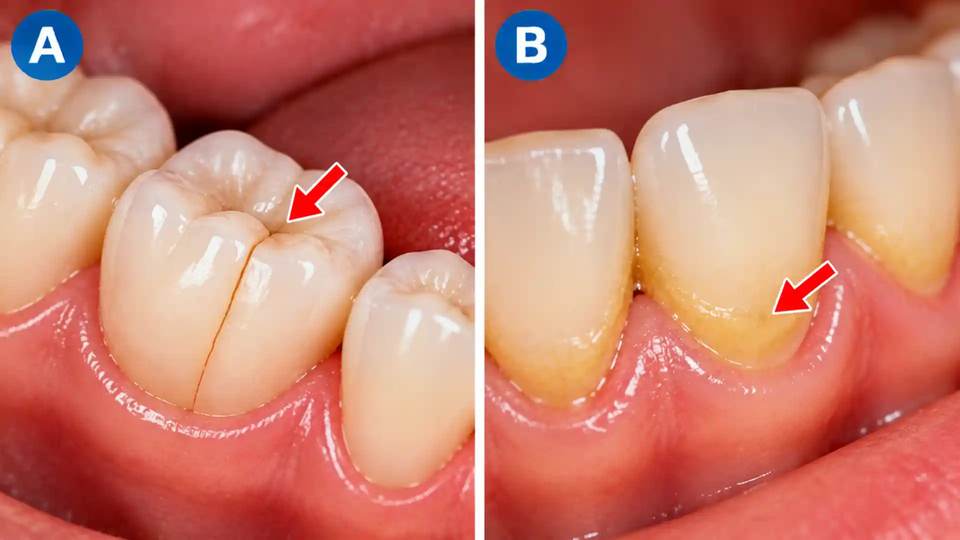
The correct quiz answer is B: A sticky film of bacteria. Dental plaque is a biofilm containing microorganisms that continuously forms on tooth surfaces. When plaque is not removed effectively, it can contribute to tooth decay, gum inflammation, and periodontal disease in susceptible individuals.
Key Takeaways:
Dental plaque is a soft, sticky bacterial biofilm that develops naturally on teeth.
Plaque can accumulate along the gumline, between teeth, and around dental restorations.
Plaque bacteria can produce acids that contribute to cavities and can trigger gum inflammation.
Some accumulated plaque can harden into tartar, which requires professional removal.
Gingivitis is generally reversible when plaque-related inflammation is addressed.
Periodontitis can damage the tissues and bone supporting the teeth.
Daily brushing, cleaning between teeth, and appropriate professional dental care help protect oral health.
This guide explains what dental plaque is, how it differs from tartar, how plaque can contribute to gum disease, and when home care or professional treatment may be appropriate.
Medical information notice: This article provides general educational information and does not replace individualized examination, diagnosis, or treatment from a licensed dental professional.
Quiz Answer: What Is Dental Plaque?
Dental plaque is the correct answer because plaque is a sticky film of microorganisms that attaches to tooth surfaces. It develops naturally in the mouth and can accumulate when brushing and cleaning between teeth do not adequately disrupt it.
A crack in a tooth is different. It is a structural defect that may occur because of chewing forces, injury, or other factors. Plaque is a microbial deposit rather than a break in the tooth's structure.
Although plaque is common, leaving it undisturbed can contribute to cavities and gum inflammation. Consistent plaque removal helps reduce these risks.
What Is Dental Plaque?
Dental plaque is a biofilm, a community of microorganisms that attaches to tooth surfaces and develops within a protective matrix. Plaque forms naturally in the mouth and can accumulate along the gumline, between teeth, behind the lower front teeth, and around crowns, fillings, bridges, and braces.
Fresh plaque is often difficult to see. Teeth may appear clean even when plaque remains between neighboring teeth or near the gumline.
The presence of bacteria does not automatically mean that someone has gum disease. Problems can develop when plaque remains on tooth surfaces, its microbial community changes, and the body's inflammatory response begins affecting surrounding tissues.
Plaque can contribute to both tooth decay and gum inflammation, but preventing cavities and managing gum disease are not identical processes.
How Is Dental Plaque Different From a Cracked Tooth?
Dental plaque and a cracked tooth are different problems. Plaque is a sticky biofilm containing microorganisms that attaches to the surface of a tooth. A crack is a structural defect in the tooth itself.
Soft plaque can generally be disrupted and removed through effective brushing and daily cleaning between teeth. A crack cannot be repaired by brushing because it involves the tooth's structure rather than a surface deposit.
A cracked tooth may cause pain when chewing, sensitivity to hot or cold foods, or intermittent discomfort, although symptoms vary. Plaque may be difficult to see and can exist without obvious pain.
If you notice persistent tooth pain, pain when biting, or suspected tooth damage, arrange a dental examination. Symptoms alone cannot reliably identify the underlying problem.
Where Does Dental Plaque Commonly Accumulate?
Plaque can form on almost any tooth surface, but certain areas are more difficult to clean thoroughly.
Common locations include the gumline, the spaces between neighboring teeth, the back surfaces of the lower front teeth, the chewing surfaces and back surfaces of molars, and areas around crowns, fillings, bridges, and braces.
These locations may be missed when brushing is rushed or when cleaning tools cannot easily reach the area. Plaque can remain even when the visible front surfaces of the teeth look clean.
Using a consistent brushing pattern and cleaning between teeth every day helps reach areas that a toothbrush alone may not adequately clean.
How Can Dental Plaque Contribute to Cavities?
Plaque bacteria can use sugars and other fermentable carbohydrates from foods and drinks to produce acids. These acids remove minerals from tooth enamel, a process known as demineralization.
Repeated acid exposure can cause mineral loss to progress and may eventually lead to a cavity. Saliva helps neutralize acids and supplies minerals that support enamel repair, while fluoride helps strengthen enamel and supports remineralization.
The risk of tooth decay depends on several factors, including sugar exposure frequency, plaque control, saliva, fluoride exposure, and individual susceptibility. The presence of plaque does not mean a cavity will inevitably develop.
Effective plaque removal and appropriate fluoride use are important parts of cavity prevention.
Plaque vs. Tartar: What Is the Difference?
Plaque and tartar are closely related, but they differ in texture, formation, and removal.
Dental plaque is a soft bacterial biofilm that develops on tooth surfaces. With effective brushing and interdental cleaning, it can generally be removed at home.
Tartar, also called dental calculus, forms when minerals from saliva become incorporated into accumulated plaque and the deposits harden. Tartar may develop above or below the gumline. Its irregular surface can retain additional plaque and make cleaning more difficult.
Unlike soft plaque, established tartar cannot reliably be removed through ordinary brushing and flossing. A dentist or dental hygienist must remove it using professional instruments.
Do not attempt to scrape tartar off with sharp household objects or dental instruments without appropriate training. These methods can injure the gums or damage tooth surfaces.
How Does Plaque Cause Gingivitis?
Gingivitis is inflammation of the gums associated with plaque accumulation. When plaque remains along the gumline, the surrounding tissues may become red, swollen, tender, or more likely to bleed during brushing or cleaning between teeth.
Bleeding gums can be a warning sign, but bleeding alone does not establish a diagnosis. Gingivitis is a common explanation, although other conditions can also cause gum bleeding.
When plaque-related gingivitis is addressed before supporting tissues are damaged, the inflammation can generally be reversed. Effective daily plaque control and professional cleaning when needed can help restore gum health.
If bleeding or swelling persists despite careful cleaning, arrange a dental examination rather than brushing more aggressively.
Can Tartar Form Before Gingivitis?
Plaque accumulation, tartar formation, and gum inflammation are related processes, but they do not always occur in one fixed sequence.
Plaque can trigger gingivitis while some accumulated plaque also becomes mineralized into tartar. Tartar formation does not require gingivitis to occur first.
Once tartar develops, its rough surface can retain additional plaque and make effective cleaning more difficult. Deposits can form above or below the gumline, and established tartar requires professional removal.
Removing tartar can improve access for ongoing plaque control, but professional cleaning does not eliminate the need for daily brushing and interdental cleaning.
How Can Plaque-Related Inflammation Progress to Periodontitis?
Periodontitis is a more advanced form of gum disease that damages the tissues supporting the teeth and can cause bone loss. Its development involves interactions among bacterial biofilm, the body's inflammatory response, individual susceptibility, and risk factors such as smoking and diabetes.
Not everyone with gingivitis develops periodontitis. However, when periodontitis develops, the gums may separate from the teeth, creating periodontal pockets that can harbor bacteria. Continued disease activity can destroy the attachment between the teeth and gums and damage supporting bone.
Unlike gingivitis, damage to supporting bone and attachment is generally not fully reversible. Professional treatment can help control periodontitis, reduce inflammation, and lower the risk of further destruction.
Reference: Centers for Disease Control and Prevention, About Periodontal (Gum) Disease: https://www.cdc.gov/oral-health/about/gum-periodontal-disease.html.
What Are the Signs of Gingivitis and Periodontitis?
Gum disease does not always cause pain. Recognizing changes in the gums can help you decide when to seek professional evaluation.
Common signs associated with gingivitis include redness or swelling along the gumline, bleeding during brushing or interdental cleaning, gum tenderness, persistent bad breath, or an unpleasant taste.
Possible signs of periodontitis include gum recession, teeth that feel loose or shift position, changes in the way the teeth fit together, increasing spaces between teeth, discomfort when chewing, or persistent swelling and drainage around a tooth.
These symptoms do not confirm a diagnosis by themselves. A dentist evaluates gum health through a clinical examination, periodontal measurements, and additional tests when appropriate. Dental X-rays may help identify bone loss that cannot be assessed from appearance alone.
Persistent bleeding, gum recession, or loose teeth warrant dental evaluation. Significant swelling accompanied by fever or facial swelling requires prompt professional assessment.
Who Is More Likely to Develop Plaque-Related Gum Disease?
Plaque can accumulate in anyone's mouth, but individual risk factors influence whether gum disease develops and how severe it becomes.
Inconsistent oral hygiene can allow plaque to remain on tooth surfaces. Smoking and tobacco use increase periodontal disease risk and can interfere with healing. Poorly controlled diabetes is associated with increased periodontal risk and more difficult disease management.
Other factors include genetic susceptibility, certain hormonal changes, medications or health conditions that reduce saliva production or cause gum enlargement, and crowded teeth or dental appliances that make cleaning more difficult.
Risk factors do not make gum disease inevitable. They help explain why two people with similar brushing habits may experience different outcomes.
Reference: National Institute of Dental and Craniofacial Research, Periodontal (Gum) Disease: https://www.nidcr.nih.gov/health-info/gum-disease.
How Can You Remove Dental Plaque at Home?
Effective plaque removal depends on consistent technique rather than aggressive brushing. A practical routine includes the following steps.
Brush twice daily with fluoride toothpaste and a soft-bristled toothbrush. Clean the outer, inner, and chewing surfaces of every tooth, angle the bristles toward the gumline, and use gentle, short movements. Brush for approximately two minutes per session.
Clean between your teeth every day with dental floss or another suitable interdental cleaner. A toothbrush cannot adequately reach every surface between neighboring teeth, where plaque can remain even when visible tooth surfaces look clean.
Pay particular attention to the gumline, the inner surfaces of the lower front teeth, the back teeth, and areas around dental restorations. A consistent brushing pattern makes it easier to identify areas that are repeatedly missed.
Plaque-disclosing tablets or solutions can temporarily color areas where plaque remains, helping you identify spots that need more careful cleaning. These products do not diagnose gingivitis or measure periodontal disease severity.
Avoid tobacco, limit frequent sugary snacks and drinks, and drink water regularly. These habits support oral health but do not replace mechanical plaque removal.
What Happens During Professional Teeth Cleaning?
Professional teeth cleaning removes plaque and tartar that remain despite daily home care. It also allows a dental professional to assess the gums and determine whether additional treatment is needed.
A routine cleaning may include an examination, removal of deposits using specialized instruments, and polishing when appropriate. The exact procedure depends on the patient's oral health and the location of the deposits.
Routine professional cleaning differs from deep teeth cleaning. Routine cleaning removes accessible plaque and tartar from tooth surfaces and around the gumline. Scaling and root planing removes deposits from below the gumline and cleans affected root surfaces when periodontitis requires more extensive care.
If plaque-related inflammation is limited to gingivitis and there is no significant damage to supporting tissues, routine professional cleaning combined with improved home care may be sufficient. When periodontitis is present, routine preventive cleaning alone may not adequately address the disease.
The appropriate appointment interval depends on oral health, tartar accumulation, previous periodontal disease, and other risk factors.
When Do You Need Deep Teeth Cleaning or Gum Disease Treatment?
Deep teeth cleaning, commonly called scaling and root planing, is a nonsurgical periodontal treatment used to manage periodontitis. Scaling removes plaque and tartar from tooth and root surfaces, including areas below the gumline. Root planing cleans affected root surfaces to help reduce bacterial deposits and support periodontal healing.
A dentist may recommend this treatment when a comprehensive periodontal evaluation indicates that deposits and disease extend below the gumline. The decision considers findings such as periodontal pocket measurements, bleeding on probing, clinical attachment loss, visible deposits, radiographic evidence of bone loss when appropriate, medical history, and other clinical factors.
Gingivitis treatment focuses on controlling plaque and removing tartar when present. Because gingivitis generally does not involve permanent loss of supporting tissue, inflammation can often be reversed when the underlying problem is addressed.
Periodontitis requires professional management because home cleaning alone cannot adequately treat established damage below the gumline. Treatment may include scaling and root planing, ongoing periodontal maintenance, or additional procedures in selected cases.
Treatment cannot guarantee that lost bone or attachment tissue will return. Its purpose is to control periodontal disease, reduce inflammation, and help prevent further damage.
Reference: American Dental Association, Scaling and Root Planing: https://www.mouthhealthy.org/all-topics-a-z/scaling-and-root-planing/.
How Can You Decide Whether You Need Home Care or Professional Treatment?
The appropriate next step depends on what you notice and whether gum disease or tartar has been identified by a dental professional.
If you have no symptoms and no obvious hard deposits, maintain daily home care and routine dental visits. If soft plaque remains after brushing, review your technique and clean between teeth every day.
If hard deposits remain on teeth, arrange professional dental cleaning because established tartar cannot be reliably removed at home. Repeated bleeding or swollen gums warrant a dental examination. Gum recession, loose teeth, or changes in your bite require prompt assessment because they may indicate damage to supporting tissues.
People already diagnosed with periodontitis should follow the recommended treatment and maintenance plan. Significant swelling accompanied by fever or facial swelling requires prompt professional assessment.
The key distinction is that home care controls soft plaque, professional cleaning removes established tartar, and periodontal treatment addresses disease affecting the supporting structures.
Common Mistakes That Make Plaque Control Less Effective
Assuming clean-looking teeth are plaque-free: Plaque can be difficult to see, particularly between teeth and along the gumline.
Treating bleeding as proof of periodontitis: Bleeding can occur with gingivitis and other conditions. Persistent symptoms deserve evaluation, but bleeding alone does not establish the diagnosis.
Trying to remove tartar at home: Scraping with sharp tools can injure gum tissue and damage teeth. Established tartar should be removed professionally.
Assuming one professional cleaning prevents future disease: Plaque begins accumulating again after cleaning, so continued home care and appropriate follow-up remain necessary.
Brushing more aggressively when gums bleed: Excessive pressure does not necessarily improve cleaning and may irritate the gums. Use a soft-bristled toothbrush and gentle technique, and seek professional advice if bleeding persists.
Frequently Asked Questions About Dental Plaque
What is dental plaque, and why does it form?
Dental plaque is a sticky biofilm containing bacteria that develops naturally on tooth surfaces. When it is not removed regularly, it can contribute to tooth decay and gum inflammation.
Can brushing and flossing remove tartar?
Brushing and flossing can remove soft plaque and help prevent additional buildup, but they cannot reliably remove established tartar. A dentist or dental hygienist must remove hardened deposits professionally.
Can gingivitis be reversed?
Gingivitis is generally reversible when plaque accumulation is controlled and contributing factors are addressed. Professional cleaning may be necessary when tartar is present. If symptoms persist, a dental examination can help identify other causes.
Is professional dental cleaning the same as deep cleaning?
No. Routine professional dental cleaning removes accessible plaque and tartar and helps maintain oral health. Deep cleaning, or scaling and root planing, treats deposits below the gumline when periodontitis requires more extensive care.
Does bleeding during brushing mean I have periodontitis?
Not necessarily. Bleeding gums commonly occur with gingivitis, but they can have other causes. A dentist must evaluate the gums and supporting tissues to determine whether periodontitis is present.
When should I see a dentist about plaque buildup?
Arrange a dental appointment if you have persistent bleeding, swollen gums, hard deposits that remain after brushing, or ongoing bad breath. Gum recession, loose teeth, and changes in your bite also warrant assessment. Significant swelling accompanied by fever or facial swelling requires prompt professional attention.
Sources
- Centers for Disease Control and Prevention (CDC). About Periodontal (Gum) Disease. https://www.cdc.gov/oral-health/about/gum-periodontal-disease.html
- National Institute of Dental and Craniofacial Research (NIDCR). Periodontal (Gum) Disease. https://www.nidcr.nih.gov/health-info/gum-disease
- National Institute of Dental and Craniofacial Research (NIDCR). Oral Hygiene. https://www.nidcr.nih.gov/health-info/oral-hygiene
- American Dental Association (ADA), MouthHealthy. Scaling and Root Planing. https://www.mouthhealthy.org/all-topics-a-z/scaling-and-root-planing/
- American Dental Association (ADA). Periodontitis. https://www.ada.org/resources/ada-library/oral-health-topics/periodontitis